Short answer. Four hours reaches five island stops. Six adds a meal and a full hour somewhere. Eight reaches Stanley and Kowloon. Twelve or more reaches Lantau and the city, in that order. Every route below stays on one side of the water except the longest.
How to read these routes
Each one is written against usable hours on the ground, not against the gap on
your ticket. Subtract an hour at the front for immigration and three at the back for
the return before you match yourself to a row.
The timing rules explain why those numbers are what they
are.
Every route here is drawn from what the operators actually run, with the minutes
each listing allots to each stop. None of it is aspirational.
Four hours: the island loop
Up to Victoria Peak first, while the air is at its clearest, for the view down
over Central and across to Kowloon. Down past the HSBC Main Building and the Bank of
China Tower. Along Hollywood Road for the antique shops and Man Mo Temple, with its
hanging incense coils. Across Wan Chai, and finish at the old fishing harbour at
Aberdeen.
Thirty minutes at each, which sounds thin and is not: these are places you stand
in rather than tour. It is the most-run route on the sheet for a reason, and a
Hong Kong 6 hour layover tour is simply this with the edges filled
in.
Five hours: Lantau and the Big Buddha
Ten minutes by road to Tung Chung, twenty-five in the cable car over the water and
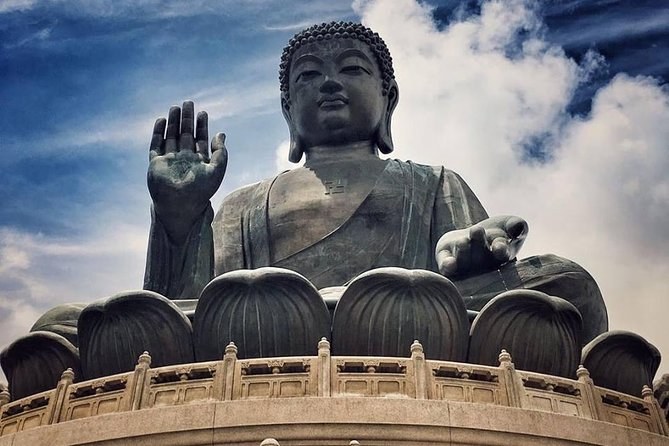
the hills to Ngong Ping, an hour at the Tian Tan Buddha and Po Lin Monastery, then
the same route back. That is the whole day, and it fits because there is no city
transfer to buy at either end.
You see nothing of the city. If this is your only visit to Hong Kong that matters;
if it is your third, it is the half you have not done.
Six hours: the island, with a meal
The four-hour loop, but Wan Chai gets a full hour and a dim sum stop goes into the
middle. That is the whole difference, and it changes the day more than an extra stop
would. A meal turns a sequence of viewpoints into an afternoon.
Several six-hour itineraries also swap the car for public transport, so the trams
and the Star Ferry become part of the route rather than a way of getting past it.
Seven hours: Lantau in full, with Tai O
The five-hour Lantau route plus a bus west along the island to Tai O, a fishing
village of houses built on stilts over a tidal channel, and a sampan ride out among
them. Chinese white dolphins are sometimes seen in summer.
Twenty minutes is what the listings allow at Tai O, which is enough for the main
channel and the dried-seafood stalls. It is reliably the stop people are gladdest
they made.
Eight hours: the island and Kowloon
Nine stops. The Peak, the banking towers, Hollywood Road, Wan Chai and Aberdeen,
then Stanley on the south coast, a dim sum stop, Chi Lin Nunnery at Diamond Hill and
the Ladies Market in Mong Kok. The operator asks for twelve hours between flights
before it will book it.
At this length the Star Ferry stops being a detour and becomes a transfer, which
is the moment a Hong Kong day starts working the way residents use the city.
Twelve hours or more: both sides
Lantau first, because the cable car queue builds through the morning and the city
is better later. Cable car up, an hour at the Buddha, back down to Tung Chung, then
across the bridge for the Peak in the afternoon and the harbour after dark.
It is a long day with two crossings in it, and below about twelve hours on the
ground the crossings cost more than the second half is worth.
An evening: the harbour after dark
If your connection runs late rather than long, the shape changes completely. Tsim
Sha Tsui promenade for the Symphony of Lights at eight, Temple Street night market
ten minutes away, and the last Airport Express back from Kowloon Station at 00:52.
Nothing about that needs a viewpoint or a queue, which makes it the most reliable
evening in the city.
The routes, side by side
| Hours on the ground | Route | Key stops | What it gives up |
|---|
| 4 | Island loop | Peak, Central, Hollywood Road, Aberdeen | Kowloon and Lantau |
| 5 | Lantau | Cable car, Big Buddha, Po Lin | The city entirely |
| 6 | Island with a meal | As above plus dim sum and an hour in Wan Chai | Kowloon |
| 7 | Lantau in full | Cable car, Buddha, Tai O and a sampan | The city entirely |
| 8 | Island and Kowloon | Nine stops including Stanley and Chi Lin | Lantau |
| 12+ | Both sides | Lantau in the morning, the city after | Nothing much |
| Evening | The harbour after dark | Symphony of Lights, Temple Street | Every viewpoint |
What will not fit, whatever you do
- Both sides of the water on under eleven hours on the ground.
- Stanley on anything shorter than an eight-hour itinerary.
- A sit-down meal plus five stops in four hours.
- The Peak in spring, when sea fog sits on the ridge for days at a time.
- Any plan that assumes cross-harbour traffic behaves at rush hour.
What do the transfers really cost you?
More than anybody budgets for. A city route spends roughly forty-five minutes each
way between the terminal and the first stop, and that is before traffic. A Lantau
route spends about ten each way to Tung Chung, plus twenty-five in the cable car,
which is time you are enjoying rather than losing.
Add the crossing between the island and Kowloon and a city day gives up close to
two hours to movement. That is why the routes above are grouped by side of the water
rather than by theme: the geography is doing more work than the itinerary is.
It is also why the tours that include the transfer both ways look expensive and
are not. You are buying back the least interesting ninety minutes of the day.
Three routes people regret
The one that tries both sides on nine hours. It reads well on
paper and is three hours of transit with four rushed stops attached. Pick a side.
The one built around the Peak in April. Sea fog sits on the ridge
for days at a time in spring, and there is no refund for a grey view. Build a spring
day around temples and markets, and treat a clear ridge as a bonus.
The one with six stops and no meal. Every traveller who describes
one of these days fondly mentions the food. Almost nobody mentions the sixth stop.
Trade it.
Where should you spend the extra hour?
If you have one spare hour, put it into a meal rather than a sixth stop. Every
traveller who describes one of these days well mentions the food, and almost nobody
mentions the stop they nearly missed. Dim sum in the middle of the afternoon is what
turns a transit into a visit.
If you have two spare hours, add Tai O to a Lantau day or Kowloon to a city one.
Both are a change of texture rather than more of the same, which is what a spare hour
should buy.
Which route suits a first visit?
The four or six-hour island loop, without hesitation. Victoria Peak, the banking
towers, Hollywood Road and Aberdeen are what people mean when they say Hong Kong,
and seeing them in one afternoon gives you the shape of the place rather than a
fragment of it. Everything else here is a second visit.
The exception is a short connection. Under about nine usable hours the island loop
stops fitting comfortably, and Lantau becomes the better day precisely because it
asks less of the clock. A first visit that runs smoothly beats a better itinerary
that does not.
What order should the stops go in?
Height first, water last. Victoria Peak wants the clearest air of the day, which
means the morning, and it also fills with coaches as the day goes on. The harbour is
the opposite: it is at its best in the late afternoon and unbeatable after dark,
and it needs no queue at any hour.
Markets sit in the middle, because most of them do not open properly until the
afternoon. Temples work at any hour. A meal belongs at the halfway point rather than
the end, where it turns a sequence of stops into a day. Guides on the private tours
sequence exactly this way without being asked, which is a reasonable argument for
letting them.
How do you build your own?
Six of these tours are customised after booking rather than fixed, so the route is
agreed with you rather than handed over. Things to do on a
layover lists every stop with the minutes it takes, which is the raw material.
Pick three, keep them on one side of the water, and let the guide sequence them.
The one rule worth keeping: do not add a stop to fill a gap. Leave the gap.
Frequently asked questions
Can I see the Big Buddha and Victoria Peak on the same day?
Only on a connection of about fourteen hours or more, which gives you twelve on the ground. Below that the two crossings eat the day. Take Lantau first if you are attempting it.
Is four hours enough to be worth it?
Yes, for five island stops with half an hour at each. It will not reach Kowloon or Lantau, and it needs eight hours between flights, but travellers who do it consistently say it beat sitting at the gate.
What if I want to see the harbour at night?
Then plan an evening rather than a day. The Symphony of Lights runs at eight from the Tsim Sha Tsui promenade, and the last Airport Express back from Kowloon Station leaves at 00:52.
Are these routes fixed?
Six of the tours build the route with you after booking. The rest run a published itinerary, though a private guide will still move a stop if you ask on the day.
Pick the row that matches your usable hours, then stop looking at the ones above it — Hong Kong Layover Tours lists which tours run each route.